

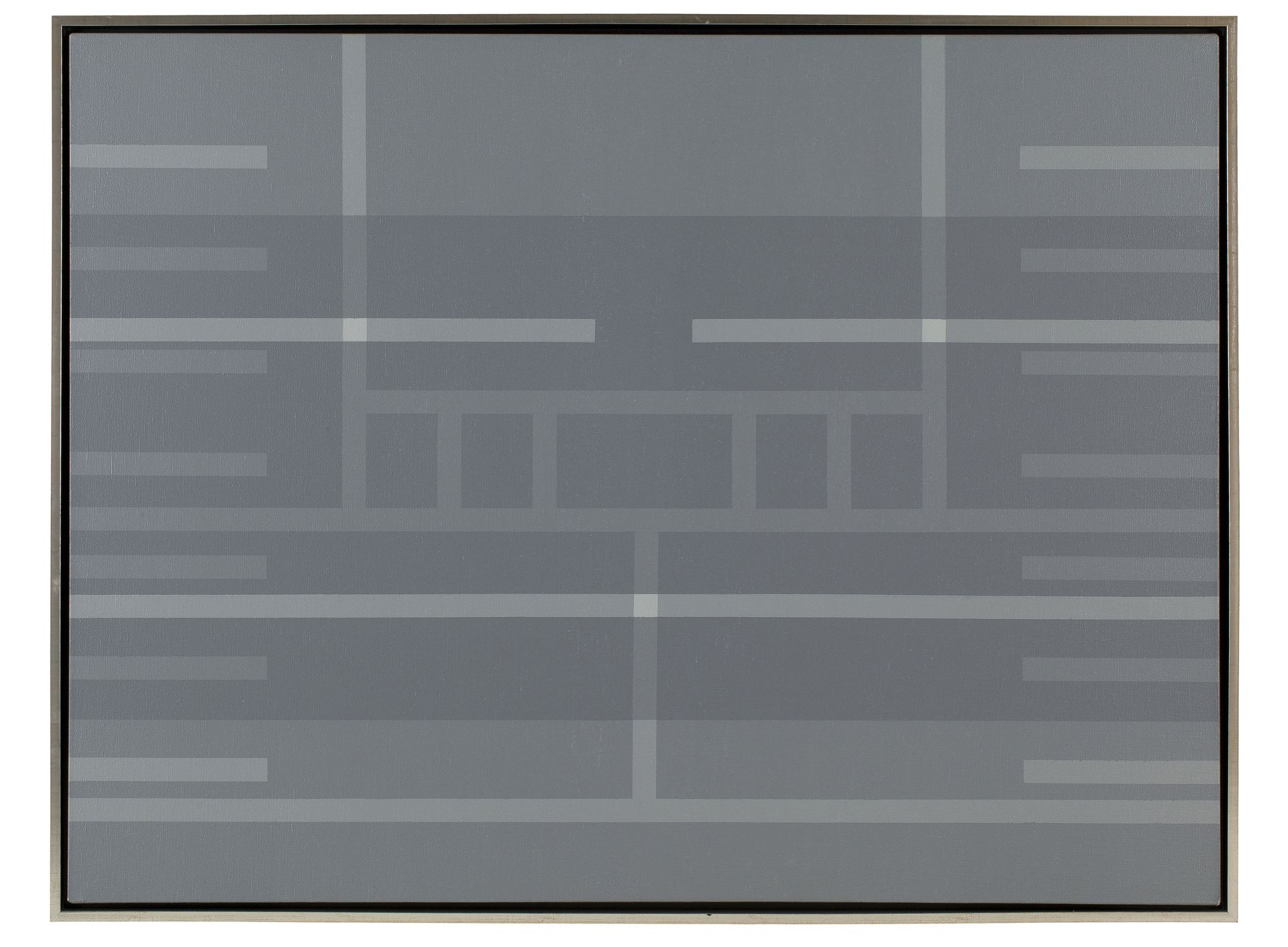
Jan ŠERÝCH Interview
© EP 2021
"And why do you think that emptiness has to be filled?
I don’t think it has to be filled."
(V. H.) Interface?
(J. Š.) Like a computer interface?
Your computer visuality?
I’m not at all certain whether that, as a characteristic of my work at present, is such a basic term; I’d say that it mostly concerns my older things, mainly drawings. The organization of visual information, greatly determined by the arrangement of the monitor...
Reality?
Like physical reality?
Physical reality?
Well, I don’t know, really what still strikes me more is that interface we were talking about before, or reality somehow predefined by a person.
Emotions?
That’s bad. Ehhh, that’s really...I try to control them more than...
Your classification of emotions?
Like positive and negative?
For instance?
Well, in reality I differentiate them more as controllable and uncontrollable. In my case, most of them are controllable, and some of them are simply...uncontrollable.
Because your works look quite rational, but probably are in some way emotive. Or intuitive?
Hmm. I think they’re more intuitive. I think that emotion is mentioned in this connection in other texts in the catalogue, but maybe that is a bit of an arbitrary interpretation, that those are all purely emotions. On the other hand, I don’t understand why any kind of geometry in art is routinely labeled right away as strictly rational expression. It seems to me that quite often the opposite is the case.
Maybe you are shifting the intuition necessary for comprehension over to the side of the viewer?
I think that at the beginning there is more of an assumption that the viewer will need 135 some sort of reading, because the very fact that texts or ciphers appear here, which is quite often the case with me, presupposes the engagement of other domains. But I would say that in the majority of cases, the rational fails, and that failure, like when you are faced with a task that you are unable to handle alone, evokes in and of itself some sort of emotion, and that I find quite interesting.
In the texts here in the catalogue you are interpreted as a master of emptiness, nothingness, lack of content?
Lack of content... I don’t even know where that is...
And in connection with the communicativeness of an artist, these are negative evaluations, aren’t they?
Well, it depends on the kind of art, doesn’t it? I think that especially in connection with orthodox geometric abstraction, lack of content is one of its definitions.
Is it based on some sort of concrete postulate or feeling?
If that’s how it really is, it definitely isn’t like some sort of conscious demonstration or taking of a position; it’s probably quite essential.
Nihilism, might we say?
Well, I must admit that I’m not too far from that.
So, then, in his text Karel Císař nicely defined this: cognitive skepticism. Do you feel yourself to be cognitively skeptical?
Yes. I think that I am becoming more and more aware of my limits — in art and elsewhere — in many things I feel my inadequacy quite urgently. Actually, it is often through my inadequacy that I define myself, so maybe I am subconsciously compensating for that in my work.
You often speak of limits. Are these limits on things or people? Can they be changed or exceeded?
One can certainly work on that to a certain extent, but even self perfection has its limits. Those limits, however, can never serve as an alibi. I have already said, for example, that this is how I define the capacity of my memory — through the gaps in it. I regard memory as my great limitation, really. I have the feeling that I remember terribly little, and moreover that I remember in a bad way. It’s a routine phenomenon with me, for example, that I don’t come up with a name until the moment when it is no longer relevant. Sometimes that just makes me furious.
The surface? The dialectic of the external and the internal? Mimicry?
I think that in this case, mimicry is a very good word... my things often look (and are supposed to look) like something completely different, so depending on the possibilities, I strive for some kind of explanation, because I think that without any additional information, in the context of art history, things can be understood completely differently from how they were intended.
And according to what strategy, ideology or key?
I don’t think ideology is involved in this. The key is basically just the aesthetic sensitivity that I apply, not completely in conformity with reason. I think that in my case, even tidying up is a very irrational affair, so when I arrange objects and maybe even information, I usually do it in a way that limits their further use.
Tidying up is the classification of things. How do you arrange things at home?
I have a sort of peculiar, square hierarchy of objects. Maybe this is subconsciously dictated by the computer interface we were talking about, that has such a crazy grid-like effect... It seems like most things in my life are subject to some sort of grid.
And is the grid 2D or 3D?
That’s interesting. For a long time it was 2D, but I have the feeling that I have graduated from that, so that I somehow went beyond the limit of that flat arrangement, and I am able to put certain things into a hierarchy in layers. But I can’t illustrate that precisely. Maybe one video, but that is a really banal example called Parallel Diary that operates in a kind of layered mode of reading.
And how are your bookshelves arranged?
Well, it’s sort of a hybrid. A hybrid of sizes and subjects, but also filling in.
In one or more layers?
In two layers. For practical reasons, because otherwise they wouldn’t fit. And I have a pretty good idea which layer the books are in. But then I usually don’t find them anyway...
Do you read a lot?
Yes, I read sometimes. It depends. I read a fair amount. I have quite a lot of books.
Do you have enough books, do you have enough knowledge about books, and do you get your knowledge from reading or from other sources?
I mix that together. I think that a lot of the information that I have about many things is second hand, including, naturally, about literature and perhaps especially philosophy. I’m a big one for skipping pages. I mean that both literally and figuratively.
Because there are people who, for instance, don’t read at all, but have all of their information about books second hand.
Like I said, maybe I’m not a complete charlatan, just a half-way one.
Is a text a sequence of letters?
I think that with me it’s my rusty typographical training, that I began to be aware of the basic unit carrying a text. I’d say that for me, from the beginning the use of letters was very formal, that simply through typographical symbols, other things appeared that didn’t have much in common with a text. Sort of a right-angle defining of myself...
What about codes?
Hmmm. You have to give some sort of a key for deciphering. That’s what is interesting for me — theoretically, the message itself need not be important, but rather the code or the key for decoding that you give out to some group of people. It might mean giving a message, and on the other hand it might mean exclusivity, the excluding of a certain circle of the public from communication.
And why use a code? Why is art encoded? Or is it encoded by its very nature? Is encoding an art in and of itself?
I don’t know whether that applies to all art, but socially that’s a bit how it works at the moment.
But then it’s a sort of code to the second power, isn’t it? When art itself is a code, and you impose another code on it.
It’s more that I make reference to coding as such, so it is a code to the second power, but maybe it’s also a naive attempt at comprehensibility, because at the same time you are putting at the disposal of the viewer an instrument through which...
...you’re pointing out that reading really isn’t natural, that it isn’t the case that before art, mankind came along, and some meaning revealed itself to him naturally?
Exactly. Because there are lots of cryptic messages that pose as ordinary information, but when to the contrary you tell right away that it’s a code, then it’s theoretically all the easier.
Consumption? Are you interested or do you deal with how we exist as consumers? The subjective formulas of consumption?
I recall an old exhibition, where I only used empty packaging. But I have the feeling that back then it was not intended at all ideologically. Consumption... I would say that those shampoo bottles and cracker wrappers were really in principle closest to my felt-tip drawings; basically what suffices is some limited quantity of elements. Industrial production is a sort of library of samples that you can obsessively combine in permutations. What seems interesting to me is the rearrangement of things that have lost their original function.
And why do you think that emptiness has to be filled? Or is that an irrelevant question?
Well, maybe the question is irrelevant. I don’t think it has to be filled.
—
Interviewing Jan Šerých (J. Š) with Vít Havránek (V. H.)
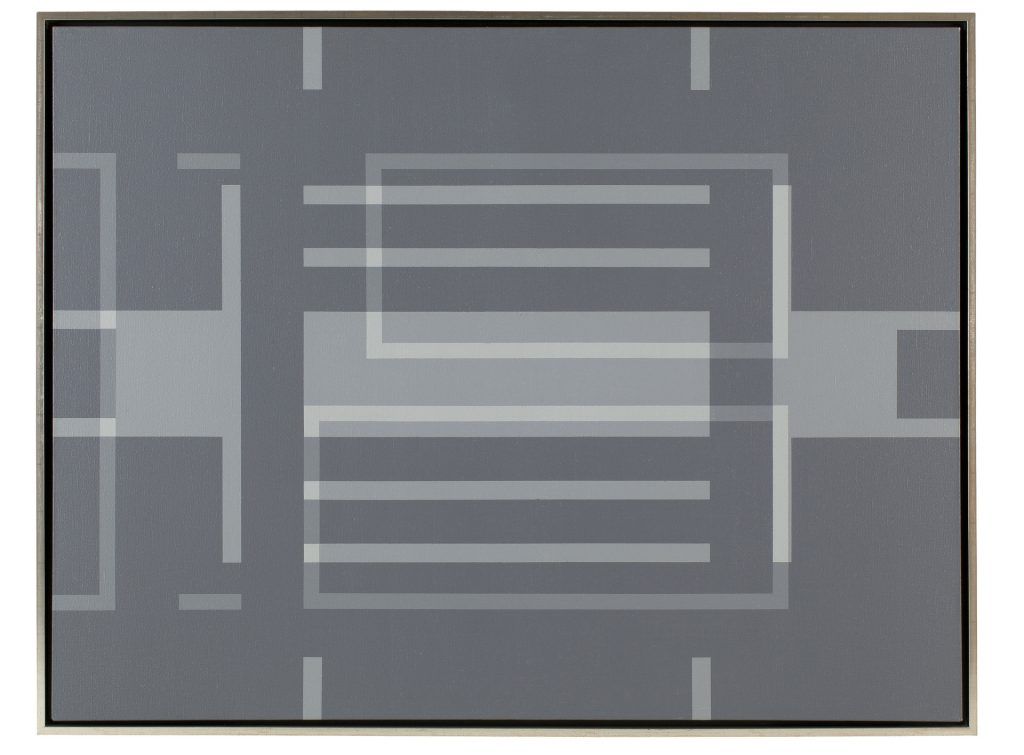
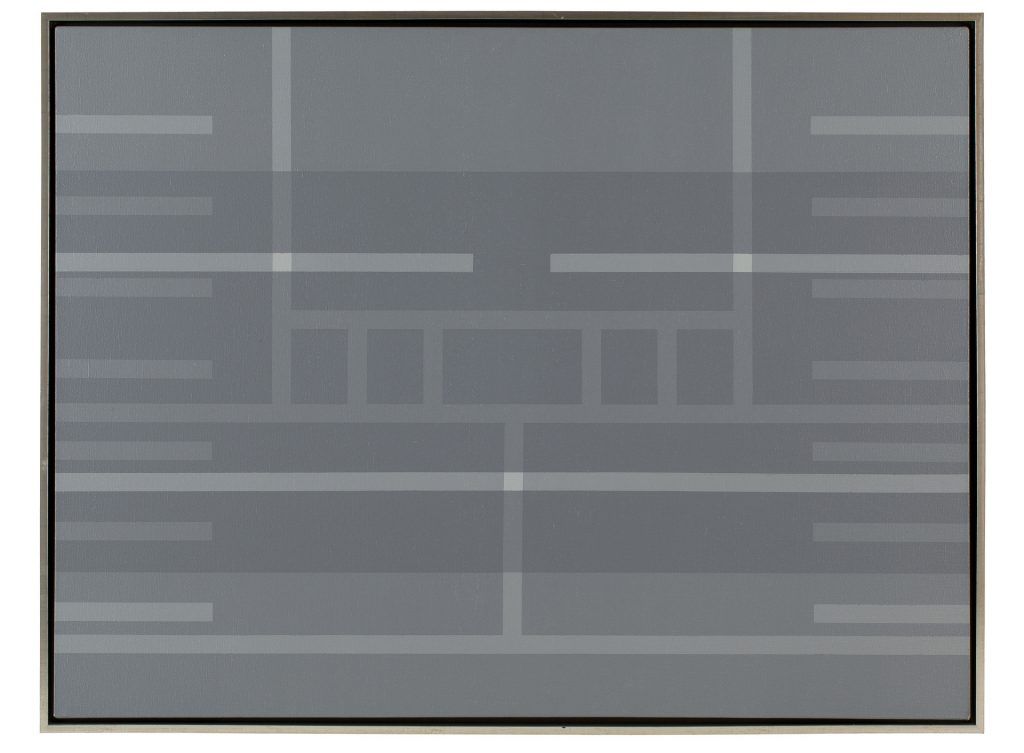
Note to the Multi-Exposures by author (page 143) “The Multi-Exposures. A Pair of pictures, which in transparent layers and with no changes in the scale or coloring provide complete visual information about my older pictures from 2000—2001.”
-----------------------------------------------------------------------------------------------
„Note“ and interview were published in the catalogue: Jan Šerých Was Born 24. 6. 2083 Minus One Published by tranzit.cz (www.tranzit.org), 2008 - ISBN 978-80-87259-01-6
More artists from the following country:
Czechia
Jan ŠERÝCH Interview
Jan ŠERÝCHClick on the coloured dots and discover the european historical context
Browse the calendar and discover the european historical context
- 1997
- 1998
- 1999
- 2000
- 2001
- 2002
- 2003
- 2004
- 2005
- 2006
- 2007
- 2008
- 2009
- 2010
- 2011
- 2012
- 2013
- 2014
- 2015
- 2016
- 2017
-
1997
José María Gil-Robles
José María Gil-Robles served as President of the European Parliament from 1997 to 1999.
Signature of Amsterdam Treaty
Signing of the Amsterdam Treaty. The Treaties establishing the European Communities and a few related acts were signed in the presence of the President of the European Parliament, José María Gil-Robles.
-
1998
Belfast Agreement
The signing of the ‘Good Friday’ or ‘Belfast Agreement’ between the Irish and the British governments led to the end of 30 years of conflict in Northern Ireland.
-
1999
1999 European elections
Voters from 15 EU countries go to the polls to elect 626 MEPs. The centre-right EPP-ED becomes the largest political group for the first time.
Nicole Fontaine
Nicole Fontaine served as President of the European Parliament from 1999 to 2002.
EURO
The euro was introduced to world financial markets as an accounting currency on 1 January 1999, replacing the former European Currency Unit (ECU).
Amsterdam Treaty
The Amsterdam treaty simplifies and broadens the application of the codecision lawmaking procedure. Parliament gets the right to approve the Commission president.
-
2000
Charter of Fundamental Rights
The Charter of Fundamental Rights of the EU is solemnly proclaimed after having been drafted by a European convention with the active involvement of MEPs.
Article 13.
Freedom of the arts and sciences. The arts and scientific research shall be free of constraint. Academic freedom shall be respected.Charter of Fundamental Rights of the European Union (2000/C 364/01)
Acquisition programme
3rd round of acquisitions with Austria, Finland and Sweden.
-
2001
National parliaments exhibiton in Brussels and Strasbourg. This exhibition was created at the initiative of President Gil Robles and was officially opened on 17 December 2001 by the then President Nicole Fontaine. It consists of works of art donated or loaned by 15 national parliaments.
-
2002
Pat Cox
Pat Cox served as President of the European Parliament from 2002 to 2004.
Euro is launched
Euro notes and coins come into circulation – a crucial stage in the construction of an economic and monetary union in Europe.
-
2003
Treaty of Nice
The Treaty of Nice reforms EU institutions to allow for the EU enlargement to Eastern Europe. It further extends the application of codecision.
-
2004
2004 European elections
Elections for the European parliament take place in 25 member states. The centre-right EPP-ED win 37% of the 732 seats.
Josep Borrell
Josep Borrell served as President of the European Parliament from 2004 to 2007.
Eastern enlargement
Ten countries, mostly from Eastern Europe, join the EU in the largest enlargement so far: Cyprus, Czech Republic, Estonia, Hungary, Latvia, Lithuania, Malta, Poland, Slovakia and Slovenia.
-
2007
Hans-Gert Pöttering
Hans-Gert Pöttering served as President of the European Parliament from 2007 to 2009.
Acquisition programme
Acquisition programme of works of art from Cyprus, Czechia and Estonia following the Bureau decision from 13 December 2006
Enlargement: Bulgaria, Romania
Bulgaria and Romania join the EU.
-
2008
Acquisition programme of works of art from Hungary and Latvia following the Bureau decision from 13 December 2006.
-
2009
2009 European elections
In the seventh European elections voters from 27 countries elect 736 MEPs. The centre-right EPP retains its majority, taking about 36% of the seats, followed by the Socialists and Democrats with 25% and Liberals with 11%.
Jerzy Buzek
Jerzy Buzek served as President of the European Parliament from 2009 to 2012.
Acquisition programme
Acquisition programme of works of art from Poland and Lithuania following the Bureau decision from 13 December 2006
Lisbon Treaty
The Treaty of Lisbon completes the institutional reform of the EU and makes the Charter of Fundamental rights legally binding. The Parliament is put on an equal decision-making footing with EU governments in all but a few legal areas.
-
2010
Acquisition programme of works of art from Slovakia, Slovenia and Malta following the Bureau decision from 13 December 2006
-
2011
Acquisition programme
Acquisition programme of works of art from Bulgaria and Romania following the Bureau decision from 13 December 2006
(…) artistic trades constitute one of the pillars on which our cultural heritage and our economy rest (…) their continuity must therefore be safeguarded by means of appropriate mechanisms for passing on knowledge and skills, as emphasised in Parliament’s resolution of 10 April 2008 on cultural industries in Europe (…)
European Parliament resolution of 12 May 2011 on unlocking the potential of cultural and creative industries (2010/2156(INI))
Establishment of a temporary rotating exhibition to mark rotating EU presidencies, starting from January 2011 (…)
The exhibition would be organised by a rotating system following the changing of the EU presidencies. Every six months, the Artistic Committee would decide on a selection of 8 to 10 works of art from the Member State concerned(…) GEDA D (2010) 41679
-
2012
Martin Schulz
Martin Schulz served as President of the European Parliament from 2012 to 2017.
Art@Europarl
The Art@Europarl exhibition presents a small selection of 27 works, mostly paintings, by artists from 27 EU countries at the Parlamentarium, the Parliament’s visitors center. It’s the first time that the general public has direct access to part of the collection.
The European Union gets Nobel Peace Prize
The EU is awarded the Nobel Peace Prize in Oslo for the contribution of Europeans to peace and reconciliation.
-
2013
Acquisition programme
Acquisition programme of works of art from Croatia following the Bureau decision from 13 December 2006.
Enlargement Croatia
Croatia becomes the 28th member of the EU and newly-elected Croatian MEPs take their seats in the European Parliament.
-
2014
2014 European elections
The eighth European elections take place in 28 EU countries. The European People’s Party (EPP) retains the largest political group in Parliament, but new parties gain influence. Turnout remains largely at 2009 level.
-
2016
Brexit referendum
UK voters decide to support leaving the European Union in a closely-fought referendum called by UK Prime Minister David Cameron. The outcome of the referendum triggers the resignation of Cameron. His successor Theresa May pledges to take the UK out of the EU and initiates the process on 29 March 2017.
-
2017
Antonio Tajani
Antonio Tajani served as President of the European Parliament from 2017 to 2019.