

3. Migration: integration and European identity
The reception of migrants and their integration into society must be ruled by the values of solidarity, equality and justice. This is the objective of the Commission’s 2021-2027 action plan on integration and inclusion, published in November 2020.
The action plan aims to promote inclusion for all, recognising the important contribution of migrants to the EU and addressing the barriers that can hinder participation and inclusion of people with a migrant background, from newcomers to citizens, in European society[i].
Moreover, Parliament’s resolution of 20 May 2021 on new avenues for legal labour migration notes ‘that the existing directives have had only a limited impact on preventing labour exploitation, and that migrant workers continue to experience unequal treatment and labour exploitation’ and ‘calls for the Union to take concerted action to address such unequal treatment and exploitation’[ii].
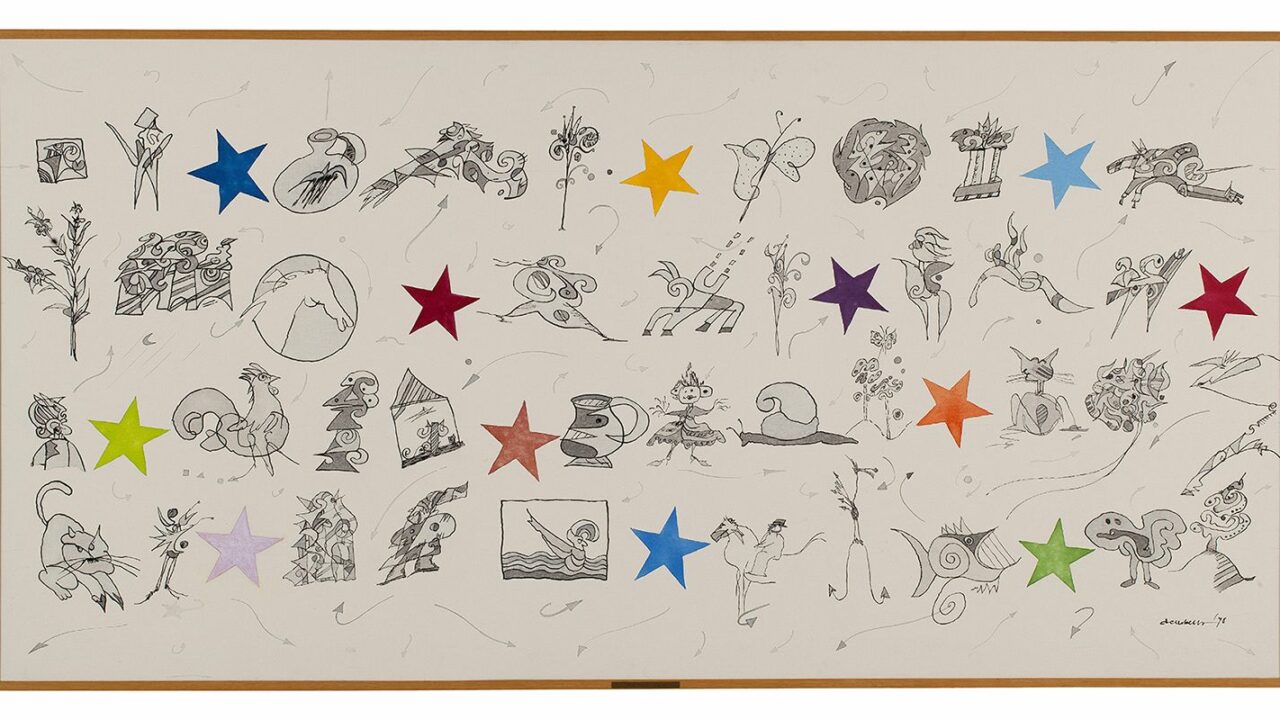
Paolo della BELLA – Europa

Boryana VENTZISLAVOVA – Migration Standards

Mani(nuestro) Our Common Manifesto

Mani(nuestro) Our Common Manifesto

Crossing Bodies, Crossing Boundaries

Crossing Bodies, Crossing Boundaries

Variations on E.U. flag n°1-4

Variations on E.U. flag n°1-4


Posse Studio

Posse Studio


Questions of mobility and integration are at the forefront of the photographic and video production of Bulgarian artist and filmmaker Borjana Ventzislavova. Based between Vienna and Sofia, Ventzislavovaworks across disciplines within film and video, installation, photography, and performative and media art. Migration Standards (2011) deals with migrants’ demands for a change in European migration policy. The protagonists are set against a backdrop featuring the main sights of Vienna, including the town hall, the Hofburg and the Belvedere and Schönbrunn Palaces[iii].
As the artist has underlined:
Street photography or mere documentation is something that I’ve always excluded. At issue here for me are the stories that are linked to these people, and furthermore the structural conditions and conventions of our society, thus my works have a documentary approach, but are always staged and placed in a setting[iv].
The problems and opportunities associated with crossing borders have been brought into focus by Bruno de Almeida in Crossing Bodies, Crossing Boundaries (2024), involving a group of people in a drawing workshop. Following this experience, Almeida remarked that:
Participants from different cultures and countries, residing in the city of Porto, used paper to create relationships and negotiations with each other, reflecting and blurring the ideas of boundaries between the individual and the collective. This creative process stimulated critical thinking, where participants observed how an artistic practice can support democracy by highlighting that coexistence in plural spaces.
A collective project, carried out under the supervision of Rachel Rouzaud and in conditions similar to those described in Almeida’s project, has resulted in four different reinterpretations of the EU flag: Variations on E.U. flag n°1-4 (2024). A comparable taste for playing with symbols and colours associated with the concept of European identity is reflected in Paolo Della Bella’s Europa (1998).Della Bella’s art, characterised by its lightness and joviality, is rooted in the tradition of comic illustration, a field and practice where he initially made a name for himself. This love for illustration and comicality blends into his more artistic works, such as Europa. The large horizontal piece features 39 hand-drawn linear illustrations paired with 12 coloured stars. The fun of this work is to attempt to decipher the cultural symbolism of each drawing, linking it to one of the countries of the EU.
Sofía Moreno’s Mani (nuestro), Our Common Manifesto (2024) follows a long tradition of manifestos, written and public declarations of doctrines, programmes or objectives, often seen in both politics and the artistic avant-garde of the contemporary age. In this case, the manifesto has a truly collective character as it gathers numerous testimonies from people in the region of La Rioja, Spain, including brief impressions and spontaneous thoughts related to the feeling of belonging to a democratic society and territory, both at local and European level.
The defence of democracy in Europe as a collective responsibility is proclaimed in a high-profile initiative promoted by the European Parliament Liaison Office in Vienna, in collaboration with local artists and the city. It features a huge mural carrying the election slogan, which will remain there indefinitely, reminding passers-by of the ‘together for democracy’ slogan for potentially years to come.
[i] European Parliament, ‘Legislative Train 06.2024, 5: Promoting Our European Way Of Life – Action Plan On Integration And Inclusion’, available at: https://www.europarl.europa.eu/legislative-train/carriage/action-plan-on-integration-and-inclusion/report?sid=8201.
[ii] European Parliament resolution of 20 May 2021 on new avenues for legal labour migration, OJ C 15, 12.1.2022, p. 196, available at: https://eur-lex.europa.eu/legal-content/EN/ALL/?uri=CELEX:52021IP0260.
[iii] Steffen Siegel, ‘Counter-Images’, 5X5 PHOTO TRACKS, special print on the occasion of 25 years of EIKON.
[iv] Aigner, S., ‘Borjana Ventzislavoba’, EIKON International Magazine for Photography and Media Art, No 80, 2012, pp. 24-29.