

1. Freedom of expression, freedom of gesture and language
Freedom of thought and expression are fundamental pillars of a truly democratic society, where citizens exercise their rights and participate effectively in matters of public relevance. These essential freedoms branch out and become more concrete in different areas of society – media freedom[i], academic freedom[ii], or freedom of the arts and sciences[iii]. Parliament has given special attention to all of them through its positions and conferences[iv].
As regards the field of the arts, Parliament acknowledges that: ‘The promotion of European cultural diversity and of the awareness of common roots is based on the freedom of artistic expression (…)’[v]. This freedom has long been an aspiration for artists that enables the creation of original and valuable works.
The liberation of the artist’s gesture on the surface of the canvas has been one of the constants in abstract trends since the end of World War II, both in Europe and the US, whether in informal art or abstract expressionism. Often, these art movements sought inspiration in the fluid lines of Chinese calligraphy and the meditative states of Zen Buddhism.
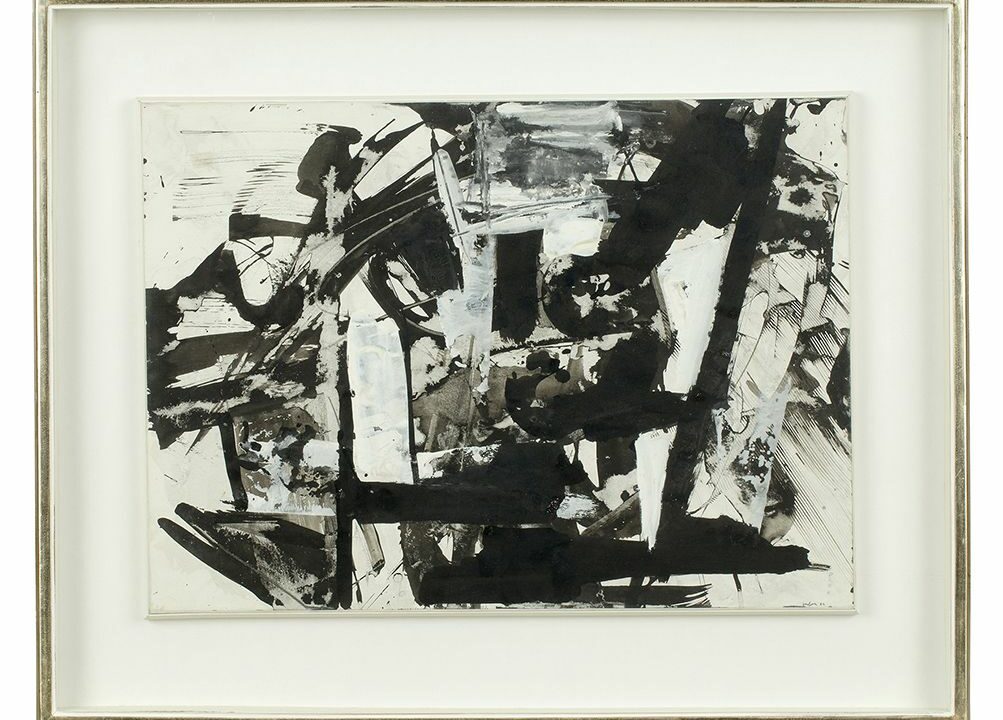
EMILIO VEDOVA – Bianco e nero

A. R. PENCK – Untitled

BURHAN DOĞANÇAY – Homage to Calligraphy

PAT ANDREA – Black Magic

GEORG BASELITZ – Man with ball – beach picture

FELIX DROESE – Das Sichtbare des Unsichtbaren

JANNIS KOUNELLIS – Composizione

ADOLF FROHNER – Odysseus auf der suche

Democratic Body

Democratic Body
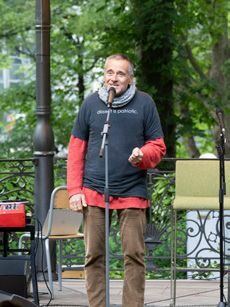
Poets for Democracy

Poets for Democracy

Poets for Democracy

Form of Freedom

Form of Freedom

Tura Kultura

Tura Kultura

Tura Kultura

Tura Kultura


Homage to Calligraphy (1981), an excellent example of the pictorial work of Turkish artist Burhan Doğançay (1929-2013) in its most stylised and elegant form, is part of his Ribbon series. The whimsical and curved lines appear as though they have come unstuck, hanging like ribbons from an imaginary wall, in a standout example of trompe l’oeil that recalls Islamic calligraphy.
Doğançay cultivated a real passion for the study of posters pasted on walls in major urban areas. In the mid-1970s, he began an extensive photo-documentary project called ‘Walls of the World’. This undertaking echoes the work of French artist Jacques Villeglé, a pioneer of street art in the early 1950s andcreator of an exceptional collection of décollage and torn poster art. This gives aesthetic value to the layers of posters and pieces of paper stuck to walls in the street or on the metro in large cities.
While Doğançay proposes a feigned and calligraphic cutting of the canvas, Felix Droese (b. 1950) instead confronts us with a literal cutting and slicing of the canvas in his 1986 work Das Sichtbare des Unsichtbaren (What is visible of the invisible). This title indicates how our mindset and beliefs (the invisible) inevitably influence our material reality (the visible).
For Felix Droese, art and political activism go hand in hand, an association that has proven a challenge for him throughout his career. In 1970, he enrolled at the Kunstakademie Düsseldorf and studied under Joseph Beuys. Droese has been active in anti-war, anti-imperialist and pro-environmental movements, and also performed his alternative civilian service in a psychiatric institution for several years. Demonstrations, imprisonment, journalistic and associative collaborations, elections and various other political endeavours have shaped Droese’s career.
The creation and codification of one’s own autonomous and personal language, an aspiration of many prominent contemporary artists, is also an important feature of A. R. Penck’s (1939-2017) work. Born Ralf Winkler in Dresden, Germany, he adopted A.R. Penck as a moniker in 1968 after the geologist Albrecht Penck.
During the 1960s, Penck developed a figural aesthetic of stick figures and uniform signs and symbols that recall prehistoric drawings. (…) His aesthetic continued to develop into the early 1970s while he lived in what was then East Berlin, German Democratic Republic (GDR). Under an oppressive communist government, Penck and his peers were subjected to secret police (Stasi) surveillance because of the avant-garde nature and political content of their work[vi].
Penck designed a kind of cryptic, primitive code intended to evade any type of censorship or control. He used a variety of aliases to sign his work, making it easier to get his paintings out of the German Democratic Republic. In 1980, he moved to West Germany and became friends with neo-expressionist painters such as Markus Lüpertz and Jörg Immendorff[vii].
Emilio Vedova (1919-2006) – Bianco e nero (1964) –, one of the greatest exponents of abstractionism in 20th-century Italy, supported the concept of art as a revolutionary and political tool. Vedova joined the Milanese anti-fascist group Corrente in 1942 and co-signed the Oltre Guernica manifesto in Milan in 1946. The Corrente group stood behind Picasso’s Guernica as the symbol and aesthetic through which to fight barbarism and tyranny[viii]. The association had no fixed programme, but its members were committed to defending ‘modern’ art at a time when the Nazi campaign against degenerate art was spreading to Italy. Vedova’s paintings from the 1950s and 1960s reflected a sensitivity to contemporary political developments, such as the revolutionary protests across Europe in 1968. Bianco e nero exemplifies Vedova’s recourse to abstraction as a means of communicating his political leanings and aspirations[ix].
The young artivists coordinated by Elena Poljuha created a series of four acrylic paintings titled Tura Kultura (2024). They used a direct, almost corporeal, approach to painting, working in a squatting position over a canvas laid horizontally on the studio floor – a method that involves a particularly direct and intimate interaction between the artist and the canvas, similar to Jackson Pollock’s action painting.
The result is a lively, visceral and spontaneous image, resembling the aggressive and nervous style of Adolf Frohner’spainting (1934-2007).In Odysseus auf der Suche (1997), Frohner reduced the human body to a blurred silhouette of reddish, unconnected lines and fragmented, ragged marks, as if a torn-apart body had been stamped on the canvas. This awkward outline, which takes up the whole image, reflects Frohner’s proximity to the aggressive performances of Viennese activists in the 1960s – an aesthetic still reflected in this painting from the late 1990s.
The Danish painter Claus Carstensen (b. 1957) is no stranger to this expressionist, pictorial language, which not only confronts the crudest and most dramatic aspects of reality, but also brings them to the fore. El Arba (1989) is a clear example of Carstensen’strong historical and political awareness. Through his use of bold colours and the often violent and unpleasant subject matters he favours, the artist openly challenges the viewer. This is evident in the chosen subject of Souk El Arba – an abandoned World War II military airfield in Tunisia[x].
As critics who have dealt with his corpus have commented:
Claus (Carstensen) is not a dark painter in any classical sense: he paints subjects that nobody wants brought to light. (…) His work deals with hard-hitting and controversial issues like the freedom of expression, totalitarianism, intimacy and nakedness. In both subject and style we are drawn into Claus Carstensen’s incessant interrogation of controlling authorities, absolutist systems, rigid categories and conventional thinking[xi].
Jannis Kounellis’ (1936-2017) deliberately rough and rudimentary use of materials is a defining feature of his self-referential work Composizione (1992). Sackcloth and coal fragments partly cover a photograph of his 1969 installation at the Attico Gallery, Rome, composed of 12 live horses. This was an emblematic milestone in the career of one of Arte Povera’s key figures.
The provocative and eccentric nature of Kounellis’ work can also be seen, albeit using very different plastic resources, in the figurative works on paper by Pat Andrea (b. 1942) – Black Magic (1981) – and by Georg Baselitz (b. 1938) – Man with ball– beach picture (1981). With its fine and polished drawing, Andrea’s work vividly captures a scene with a murky, dreamlike background. Recurring themes in the artist’s career include fear, desire, power, cruelty and eroticism. Baselitz, on the other hand, depicts one of his signature upside-down figures with loose lines and splatters. In a radical turning point in 1969, Baselitz decided to paint and display his subjects upside down. This ‘inverted’ painting attests to his desire to strictly follow his own path –an independence that he had already demonstrated through the ‘Pandemonic Manifestos’ (1961-62) that he co-wrote with Eugen Schönebeck[xii].
The freedoms of expression and creation that we consider normal and basic in Europe today – freedom of bodily and oral expression, freedom of thought and speech, and freedom of geographical movement – all constitute the central motifs of the artivism works grouped in this section.
Democratic Body (2024), by Leander Kampf and Sam Alekksandra, is a video performance in which Kampf performs a dance while Alekksandra recites a poem. The dance is based on formal parameters that were subject to democratic consultation. Through an (online) survey, respondents determined the dance’s structure, based on certain criteria and characteristics (the most used parts of the body, rhythm, direction, etc.).
The Citizens’ Garden Poetry Slam (2024) brought together several European poets who shared their work, freely expressing their thoughts and impressions on the current situation in the EU.
Bozhana Slavkova’s immersive installation, Form of Freedom (2024), was conceived as a crystallisation of freedom of movement across the EU. It is a subtle and weightless metaphor about the current possibility to freely move across the continent –a benefit that was unconceivable for many Europeans generations ago.
[i] European Commission, ‘European Media Freedom Act’, available at: https://commission.europa.eu/strategy-and-policy/priorities-2019-2024/new-push-european-democracy/protecting-democracy/european-media-freedom-act_en.
[ii] European Parliament, ‘EP Academic Freedom Monitor 2023’, available at: https://www.europarl.europa.eu/thinktank/en/document/EPRS_STU(2024)757798;
European Parliament, ‘European Parliament Forum for Academic Freedom’, available at: https://www.europarl.europa.eu/stoa/en/ep-academic-freedom.
[iii] Charter of Fundamental Rights of the European Union, Article 13 – Freedom of the arts and sciences: ‘The arts and scientific research shall be free of constraint. Academic freedom shall be respected’.
[iv] Regulation (EU) 2024/1083 of the European Parliament and of the Council of 11 April 2024 establishing a common framework for media services in the internal market and amending Directive 2010/13/EU (European Media Freedom Act), OJ L, 2024/1083, 17.4.2024, ELI: http://data.europa.eu/eli/reg/2024/1083/oj; European Parliament, Conference on media freedom and journalists under pressure, 10 April 2024.
[v] European Parliament legislative resolution of 28 March 2019 on the proposal for a regulation of the European Parliament and of the Council establishing the Creative Europe programme (2021 to 2027) and repealing Regulation (EU) No 1295/2013, ‘The promotion of European cultural diversity and of the awareness of common roots is based on the freedom of artistic expression, the capability and competences of artists and cultural operators, the existence of flourishing and resilient cultural and creative sectors in the public and private domain and their ability to create, innovate and produce their works and distribute them to a large and diverse European audience’, OJ C 108, 26.3.2021, p. 934.
[vi] Blumberg, N. and Yalzadeh, I., ‘A.R. Penck’, Encyclopaedia Brittanica, https://www.britannica.com/biography/A-R-Penck.
[vii] Both painters are also featured in the European Parliament Art Collection:
https://art-collection.europarl.europa.eu/en/collections/lokomotiven/ and https://art-collection.europarl.europa.eu/en/collections/wahle/.
[viii] Talvacchia, B. L., ‘Politics Considered as a Category of Culture: The Anti-Fascist Corrente Group’, Art History, Vol. 8, No 3, 1985, pp. 336-355.
[ix] Fondazione Emilio e Annabianca Vedova, ‘Emilio Vedova: una biografia per immagini’, available at: https://www.fondazionevedova.org/emilio-vedova-una-biografia-immagini.
[x] The artwork was featured in the solo exhibition entitled ‘Claus Carstensen: Maghreb Journal’, held in Galleri Specta (Denmark) in 1989. Although the title that appears in the acquisition file is ‘El Arba’, the work should actually be titled, according to this catalogue, ‘Ej Jemaa’, oil, 200 x 170 cm, 301288-150289.
[xi] Claus Carstensen, ‘What’s left (is republican paint) – Nine Sisters’, (Exhibition catalogue), ARoS Aarhus Kunstmuseum, 2015, ‘Alongside his artistic practice, Claus Carstensen has also curated numerous exhibitions, all of which are based on conceptual and formal connections often overlooked in art history. These exhibitions break down art-historical classifications and categories to establish alternative narratives. Like the exhibition Becoming Animal, they address a conceptual and philosophical issue, but also embody a formal and morphological investigation of similarities that recur across different periods, media and styles’.
[xii] Berlinische Galerie, ‘Angry pamphlet: “Pandemonic Manifesto” by Georg Baselitz and Eugen Schönebeck’, available at: https://berlinischegalerie.de/en/collection/specialised-fields/artists-archives/pandaemonisches-manifest/; The Morgan Library and Museum, ‘Baselitz wrote (these manifestos) in 1961 and 1962 with his friend Eugen Schönebeck to accompany their first exhibition. Referencing sex, death, and religion, the text expresses postwar German disorder and confusion in a forceful language influenced by the writings of Samuel Beckett, Antonin Artaud, and Comte de Lautréamont. Baselitz later described the manifesto as ‘nothing but fury with rather half-baked ideas.’ Mirroring their gruesome and violent descriptions, his drawings from this period show deformed figures and organic masses of twisted, shapeless bodies, available at: https://www.themorgan.org/drawings/item/444549.