

2. Ethics and political freedom, democracy and voting
The Treaty on European Union establishes that ‘Every citizen shall have the right to participate in the democratic life of the Union. Decisions shall be taken as openly and as closely as possible to the citizen’[i]. Transparency and ethics are issues closely related to the exercise of political freedom and the right to vote. Parliament has addressed them through various initiatives such as the Code of Conduct for Members, the Transparency Register or its public register website[ii].
The proposal of the artivist Sára Bányai – Rethink with the Communitives of Malmö(1 June 2024) – playfully highlights the need to act according to ethics and a sense of responsibility in the exercise of political freedom. By designing a card game and a corresponding instruction manual, made to ‘rethink’ the lives of communities in a specific and real place in Sweden, Bányai raises the questions of how and for what purposes freedom to vote and participate should be used. Within the rules and development of this game, the term ‘communitive’ refers to the synergies between community-focused projects and communities that dare to take initiative.
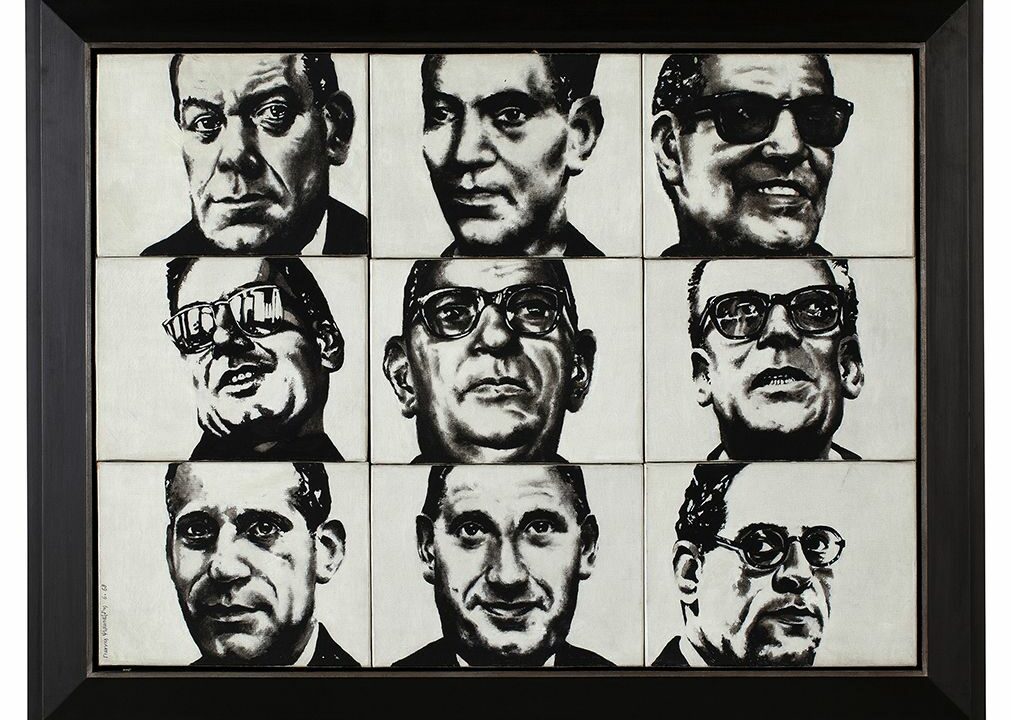
YANNIS PSHYCHOPEDIS – Portrait de Lorca

PAUL GRAHAM – Untitled, Germany (Swarm of flies / Hole in Ground)

BERIT HEGGENHOUGEN-JENSEN – Untitled

Changemakers

Changemakers

Disco Voting Booth

Disco Voting Booth

ARKoPOLL: the party!

ARKoPOLL: the party!

Rethink with the Communitives of Malmö

Rethink with the Communitives of Malmö

Hygge

Hygge


In Berit Heggenhougen-Jensen’s diptych – Untitled (1990) – the green felt of a casino table raises ethical and moral questions about the decisions made over the course of a game that involves the movement of money and resources. The table itself is an object that has received privileged attention in the works of several of the selected artivists (Bányai, Almeida). Rosina Lui makes a special type of table the centrepiece of her work, Hygge (2024). This low table, beyond its mere physicality and usefulness for having coffee, embodies historical, social and political values that Lui has highlighted:
Hygge — first appearing in Danish writing in the 19th century — is a universally popular word that denotes a cosy, convivial mood of contentment. It is not only an individual psychological state but also an everyday experience of togetherness, safety, equality, social flow, and personal wholeness. Behind hygge is a strong and sustainable political structure that supports each individual’s rights and freedoms of cultural, social, and political participation. This piece — functionally a centrepiece low coffee table — captures the essence of an open, democratic, cooperative society.
From a different angle than the aforementioned works, Yiannis Psychopedis’ (b. 1945) workin the late 1960s largely deals with the abuse of power in an effort to curtail the freedom of citizens, reflecting the political situation in Greece at that time[iii]. Lorca (1968), with its biting and fierce documentary tone, depicts a gallery of characters presumed to hold high positions in the political hierarchy. The ugliness of the faces is accentuated in another of Psychopedis’ works from the same period: ‘The Saviors’ (1968)[iv].
Psychopedis’ painting follows the visual codes adopted by other artists and groups of the time, such as the Spanish Equipo Crónica and Equipo Realidad, collectives that made extensive use of images borrowed from newspapers, cinema and art history as a way of commenting on social and political realities. As art critics and historians have pointed out:
Jannis Psychopedis, whose post-1964 work combined a political agenda with a black and white newspaper aesthetic and the concept of the photo-essay, sometimes references members of the political and social elites directly. The cold photographic aesthetic allowed Psychopedis to record the grim and harsh realities of the age objectively and unemotionally[v].
Paul Graham’s (b. 1956) photographic diptych, Untitled, Germany (Swarm of flies/Hole in Ground) (1990), contrasts a close-up of a dirt hole with an image of a swarm of flies taken from below. According to the critic who commented on this work for the catalogue of acquisitions from the United Kingdom in 1992, the double image serves as a visual testimony to the material trace that the Berlin Wall, as a tool of repression and separation between allied people, left on the urban landscape:
In Paul Graham’s photographic diptych the artist has focused his camera on the ground where the Berlin wall once stood, gently recapitulating recent historical events. In the right panel the viewer is plunged into the residual hole of a political boundary, whilst in the left the viewer’s gaze ascends upwards towards the sky to witness flies swarming, and as the miniature Valkyries recede into the distance an ominous omen of political strife lingers in the air[vi].
The Psychopedis painting mentioned above can be juxtaposed with another artwork depicting multiple portraits in a very different way – Changemakers (2024), by the Bulgarian photographer and artivist Iliyana Grigorova. The protagonists of this kaleidoscopic collective portrait are the people – activists and artivists – that Grigorova met while participating in the ‘Pop the vote!’ project referred to in the introduction.
Through her use of cyanotype, one of the primitive photographic techniques of the 19th century, with its characteristic bluish monochrome, Grigorova declares her sincere admiration for these people. The use of a technique that would be considered rare today seems intended to highlight the enthusiasm, courage and dynamism of each individual. These are qualities that we can also appreciate in the works of Ulysse Vassas – Disco Voting Booth, (2024) and Fjorida Cenaj (Cultterra Team) – ARKoPOLL: the party! (2024). The driving idea behind these works is to experience and share democracy as a celebration open to the participation of all.
[i] The Treaty on European Union, Title II, Article 10.
[ii] European Parliament, ‘Transparency and ethics’, available at: https://www.europarl.europa.eu/at-your-service/en/transparency.
[iii] Hellenic Ministry of Culture, National Museum of Contemporary Art, ‘The years of defiance: the art of the ‘70s in Greece’, ‘Greece experienced a (…) period of political crisis and unrest, with a series of short-lived governments in the wake of the constitutional crisis of July 1965. The coup d’état of April 21 1967 imposed a dictatorship that was to last seven years and end with the Turkish invasion of Cyprus and the occupation of a large part of the island.’; ‘(…) the impact of contemporary events on the world stage could not fail to sensitise Greek artists. Art became intensely politicised around the world during this period, and the events in Greece provided artists with a wealth of existential raw material for their work, reinforcing their desire to intervene critically; a desire that stemmed from their experiences of life, from a deep-seated necessity, and from the spirit of an age that inspired the struggle for ideas. (…)’, December 2005-May 2006.
[iv] ‘The Saviors’ (1968) is reproduced in the following article in ART – ΝΕΑ,3 October 2023, ‘The large retrospective exhibition “Yiannis Psychopaidis. Art as a fighting testimony. Works of the 1960s and 1970s and their aftermath’, which opens tomorrow (2023) at the Central Corfu & Diapontian Islands Municipality Art Gallery, focuses on the artistic production of the 1960s and 1970s – https://www.efsyn.gr/tehnes/art-nea/406500_pneyma-shima-kai-hroma-mias-oramatikis-aristeras; About other recent projects on the artist: ‘The artistic spring of Giannis Psychopaidis’, 14 April 2024,
‘With two of his exhibitions in Germany and England in April and then in June in Greece, Yiannis Psychopaidis spreads artistically with his work in the wider European area (…) Psychopedis was one of those who, living between Munich, Berlin and Brussels, left his artistic imprint and lasting, significant presence in theaters, art museums, galleries and institutions’. https://www.efsyn.gr/nisides/429467_i-kallitehniki-anoixi-toy-gianni-psyhopaidi – We thank TWOFOURTWO for their help in finding out additional information about the political-historical context of Psychopedis’ painting in Parliament’s collection.
[v] Hellenic Ministry of Culture, National Museum of Contemporary Art, ‘The years of defiance: the art of the ‘70s in Greece’, December 2005-May 2006.
[vi] ‘Twelve stars – selected works from the European Parliament Art Collection featuring new British acquisitions’, 1992; Catalogue of the exhibition held in Belfast, Edinburgh and London between October 1992 and January 1993.