

4. Caring for the most vulnerable
In 2024, Parliament adopted several legislative texts to reform European migration and asylum policy as agreed with EU Member States[i]. Among the main objectives of this Migration and Asylum Pact is to regulate, with greater fairness and effectiveness, the way in which Member States offer protection to people who are being threatened by acts of persecution and violence.
The integration of foreigners and refugees into EU countries is one of the themes and concerns reflected in the works grouped under this heading. In her project entitled Russian occupation in Georgia (2024), Ani Melikidze merges photojournalism and portraiture. Her characters, refugees, look us in the eyes with frankness and without fear. The hallways and stairs of the sanatorium where refugees were placed in the city of Abkhazia, owing to the Russian invasion, reveal all the desolation and ruin caused by war. In harmony with these images, Alice Kask’s Nimeta (2001) depicts an old, punctured piece of wood that looks as if it had just been pulled from a pile of debris.
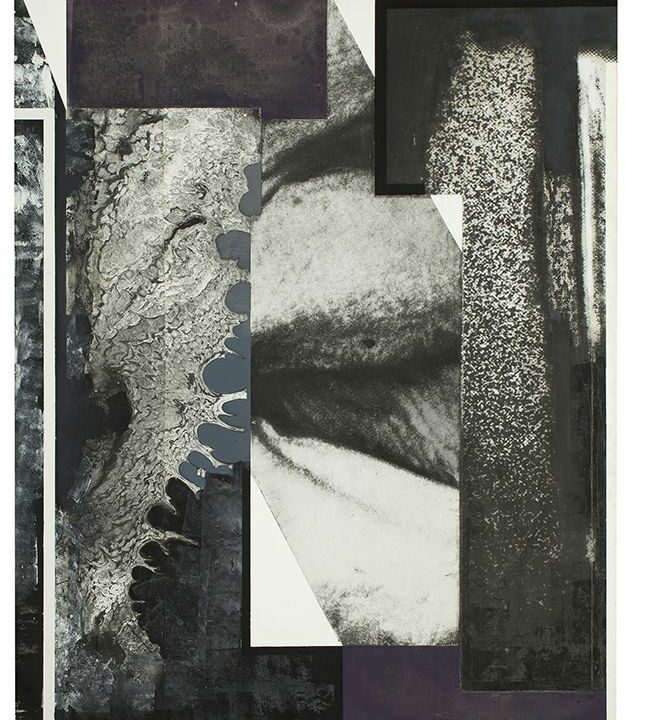
Darío VILLALBA – Itero Malva

Tiong ANG – Portret van een jongen (animatie)

Alex FLETT – Ionic Pastoral

Alice KASK – Nimeta

ANI MELIKIDZE – Russian occupation in Georgia

ANI MELIKIDZE – Russian occupation in Georgia

ANI MELIKIDZE – Russian occupation in Georgia

ANI MELIKIDZE – Russian occupation in Georgia

ZSOFI KOZMA – //NEM// SZÁMÍTOK / I DO //NOT// MATTER

ZSOFI KOZMA – //NEM// SZÁMÍTOK / I DO //NOT// MATTER

TWOFOURTWO – Postcards from Cyprus

TWOFOURTWO – Kalos Kakos Ilthate


Zsófi Kozma – //NEM// SZÁMÍTOK (I DO //NOT// MATTER) (2024) – offers a perspective on the difficult integration of many migrants into Europe through her delicate and extensive textile installation. This theme is also explored in several works by the duo TWOFOURTWO (Constantinos Kounnis and Costas Mantzalos): Postcards from Cyprus (2017) and Kalos Kakos Ilthate (Welcome, Welcome Not) (2020-2021).
Postcards from Cyprus (2017) was an ongoing activity for three years, which initially derived from the critical stance that TWOFOURTWO took from the socio-political situation of Cyprus since the financial crisis of 2013 and the aftermath caused by the collapse of the banking system[ii].
The treatment of refugees is highlighted by the neon installation on the seashore: Kalos Kakos Ilthate (Welcome, Welcome Not) (2020-2021).
TWOFOURTWO art group’s investigative look at immigration and the subject of refugees is communicated via the imagery of their landscape photographs, which focus on the sea and the shoreline. (…) The viewer’s mind drifts towards the current international lingua franca used to communicate these images, for example ‘flow of refugees’, ‘uprooting’ and the haunting ‘human cargo’. A double-faced sign reading ‘καλώς/κακώς ήλθατε’ reminds us that the journey leads to a precarious future. A deliberate addition of a letter from L to K results in manifold meanings. From welcome to welcome NOT or even ‘good or bad you may as well be welcome’[iii].
The care of children, ‘Europe’s new refugees’, in Ani Melikidze’s photo-project, is a central theme in Tiong Ang’s diptych Portret van een jongen (animatie) (1993). It depicts a boy resting in bed in the style of a real photograph. The artist used green paint with an unhealthy yellowish tinge on a thin canvas, mounted on a frame in the shape of an open book. The act of pulling back an eyelid to examine a pupil perhaps unintentionally evokes the disturbing close-ups used by Luis Buñuel in his 1929 surrealist film, Un Chien Andalou. However, in that case, the eye was forcefully opened to be sliced with a penknife. This was a metaphor for the radical way in which the artist was seeking to broaden viewers’ perspectives.
Situations of fragility and illness have been tackled by Darío Villalba (1939-2018) and Alex Flett (b. 1950), using different visual strategies. Villalba’s Itero (1989) contains snippets, both pictorial and photographic, of large parts of the human body, which are impossible to identify exactly. However, we can see their shaky carnality through the use of different shades of grey. This fusion of painting and photography is typical of this artist. Some of the work that brought him international fame in the 1960s, the encapsulados series, appears to have been put under the microscope in Itero. Andy Warhol dubbed the work ‘pop soul’ as he was struck by the deep human truth that the anonymous subjects reflected: disabled, marginalised beggars or sick people, isolated in acrylic bubbles[iv].
Alex Flett’s Ionic Pastoral (1996) is an unusual memento mori.17th-century Baroque paintings of idyllic landscapes in which shepherds unexpectedly discover a human skull or a sepulchre with the inscription ‘Et in Arcadia ego’ were common musings on the fleeting nature of life. Flett, however, associates a playful polychromatic composition, painted on a canvas and laid on the floor, with the powerfully silent presence of a sheep skull crowning a totemic pillar.
As described by Flett himself:
The painting base (oil on canvas) uses imagery from the old Celtic practice of erecting donut shaped stones through which were passed the sick, particularly children suffering from the vitamin deficiency disease Rickets, by way of a magical cure. This ancient concept is further reflected by the use of the ram’s skull sitting on its shale covered wooden fence post reflecting ‘pagan’ ignorance.
However, inserted within the eye sockets are glass lenses on the back of which are painted small Celtic Crosses. Old Celtic saints, particularly St. Columba of Iona would take over old Celtic Pagan sites and Christianise them with a cross. (…) Rickets and other such vitamin deficient diseases were a serious problem both in Scotland and Europe for hundreds of years right up to and including this present century.
Many politicians of conscience, have fought to improve both the diet and the living standards of those most at risk, as Columba fought for the soul of a small wild country 14 centuries ago. A parallel battle against that worst of enemies, ignorance. The artist hopes that Ionic Pastoral will inspire politicians within the European Parliament to work towards the eradication of ignorance and disease wherever they are[v].
[i] European Parliament, ‘MEPs approve the new Migration and Asylum Pact’, available at: https://www.europarl.europa.eu/news/en/press-room/20240408IPR20290/meps-approve-the-new-migration-and-asylum-pact; European Parliament, ‘Legislative Train 06.2024, 5: Promoting Our European Way Of Life – Regulation On Asylum And Migration Management – Q3 2020’, available at: https://www.europarl.europa.eu/legislative-train/carriage/asylum-and-migration-management-regulation/report?sid=8201.
[ii] Mantzalos, C. and V. Pericleous, ‘Cultural Errors and Creativity: How Visual and Textual Triggers Create New Meanings’, Error is New Culture, ‘242 use appropriation in their oeuvre. They have used and reinvented new concepts from numerous industrial signs that came down from bankrupted business as a result of the financial crisis. Additionally they re-contextualised the work by twisting the meaning of these signs in order to re-create new names/words that promote a critical view of the current situation in Cyprus. It is a twister as well as a combination of text and image, which illustrates the daily routine in Cyprus through the concept of consumerism, greed and megalomania (…) Parallel to this, they offer new questionings. Is the financial crisis the “New Cyprus Problem”? Are the words “occupied land” and “refugees” going to be replaced by the words “non-performing debts” and “unemployment”?’.
[iii] Ibidem.
[iv] Museo Nacional Centro de Arte Reina Sofía, ‘Darío Villalba: una visión antológica, 1957-2007’, Madrid, 2007.
[v] European Parliament Art Collection Archive.