

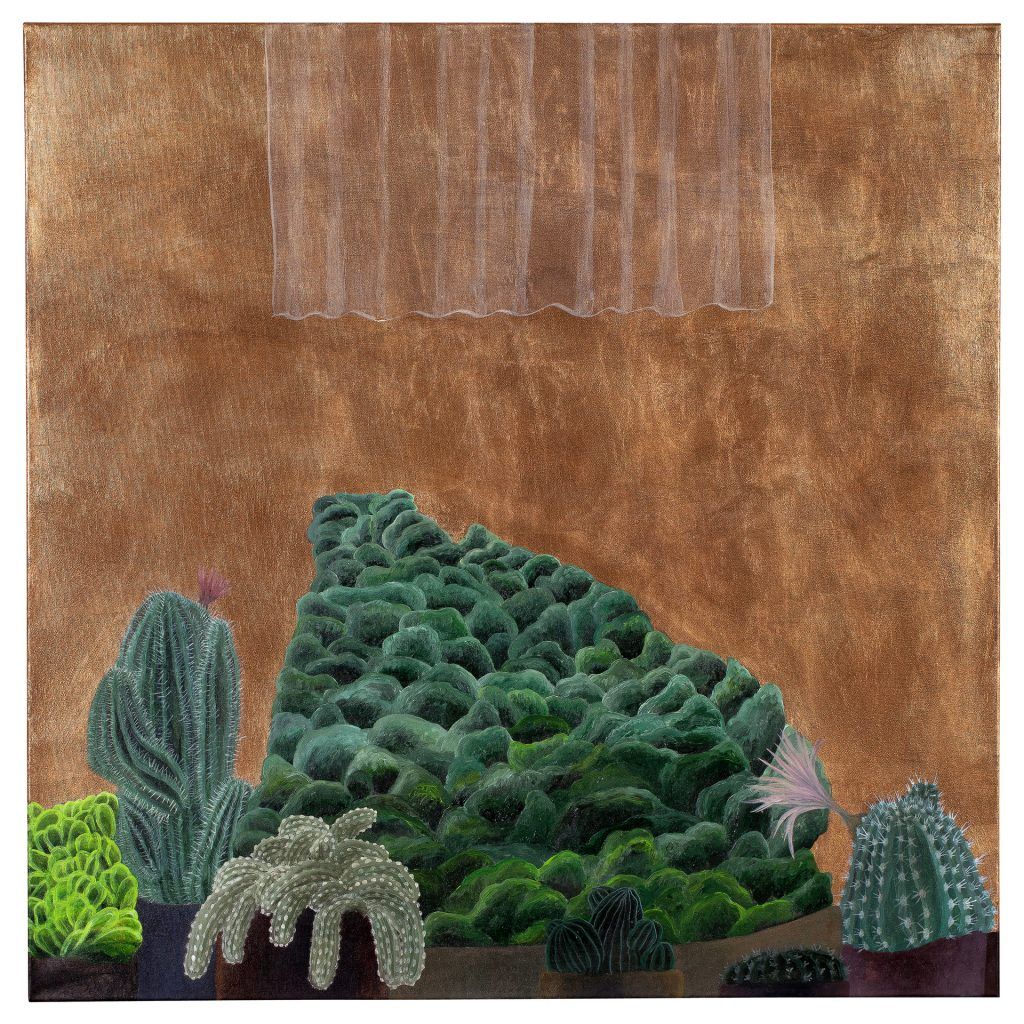
The End of The Fairy Tale I
 © EP 2021
Von derselben kunstschaffenden Person
Weitere Künstler aus folgendem Land:
Rumänien

The End of The Fairy Tale I
Suzana DANClick on the coloured dots and discover the european historical context
Browse the calendar and discover the european historical context
- 2001
- 2002
- 2003
- 2004
- 2005
- 2006
- 2007
- 2008
- 2009
- 2010
- 2011
- 2012
- 2013
- 2014
- 2015
- 2016
- 2017
- 2018
- 2019
- 2020
- 2021
-
2001
National parliaments exhibiton in Brussels and Strasbourg. This exhibition was created at the initiative of President Gil Robles and was officially opened on 17 December 2001 by the then President Nicole Fontaine. It consists of works of art donated or loaned by 15 national parliaments.
-
2002
Pat Cox
Pat Cox served as President of the European Parliament from 2002 to 2004.
Euro is launched
Euro notes and coins come into circulation – a crucial stage in the construction of an economic and monetary union in Europe.
-
2003
Treaty of Nice
The Treaty of Nice reforms EU institutions to allow for the EU enlargement to Eastern Europe. It further extends the application of codecision.
-
2004
2004 European elections
Elections for the European parliament take place in 25 member states. The centre-right EPP-ED win 37% of the 732 seats.
Josep Borrell
Josep Borrell served as President of the European Parliament from 2004 to 2007.
Eastern enlargement
Ten countries, mostly from Eastern Europe, join the EU in the largest enlargement so far: Cyprus, Czech Republic, Estonia, Hungary, Latvia, Lithuania, Malta, Poland, Slovakia and Slovenia.
-
2007
Hans-Gert Pöttering
Hans-Gert Pöttering served as President of the European Parliament from 2007 to 2009.
Acquisition programme
Acquisition programme of works of art from Cyprus, Czechia and Estonia following the Bureau decision from 13 December 2006
Enlargement: Bulgaria, Romania
Bulgaria and Romania join the EU.
-
2008
Acquisition programme of works of art from Hungary and Latvia following the Bureau decision from 13 December 2006.
-
2009
2009 European elections
In the seventh European elections voters from 27 countries elect 736 MEPs. The centre-right EPP retains its majority, taking about 36% of the seats, followed by the Socialists and Democrats with 25% and Liberals with 11%.
Jerzy Buzek
Jerzy Buzek served as President of the European Parliament from 2009 to 2012.
Acquisition programme
Acquisition programme of works of art from Poland and Lithuania following the Bureau decision from 13 December 2006
Lisbon Treaty
The Treaty of Lisbon completes the institutional reform of the EU and makes the Charter of Fundamental rights legally binding. The Parliament is put on an equal decision-making footing with EU governments in all but a few legal areas.
-
2010
Acquisition programme of works of art from Slovakia, Slovenia and Malta following the Bureau decision from 13 December 2006
-
2011
Acquisition programme
Acquisition programme of works of art from Bulgaria and Romania following the Bureau decision from 13 December 2006
(…) artistic trades constitute one of the pillars on which our cultural heritage and our economy rest (…) their continuity must therefore be safeguarded by means of appropriate mechanisms for passing on knowledge and skills, as emphasised in Parliament’s resolution of 10 April 2008 on cultural industries in Europe (…)
European Parliament resolution of 12 May 2011 on unlocking the potential of cultural and creative industries (2010/2156(INI))
Establishment of a temporary rotating exhibition to mark rotating EU presidencies, starting from January 2011 (…)
The exhibition would be organised by a rotating system following the changing of the EU presidencies. Every six months, the Artistic Committee would decide on a selection of 8 to 10 works of art from the Member State concerned(…) GEDA D (2010) 41679
-
2012
Martin Schulz
Martin Schulz served as President of the European Parliament from 2012 to 2017.
Art@Europarl
The Art@Europarl exhibition presents a small selection of 27 works, mostly paintings, by artists from 27 EU countries at the Parlamentarium, the Parliament’s visitors center. It’s the first time that the general public has direct access to part of the collection.
The European Union gets Nobel Peace Prize
The EU is awarded the Nobel Peace Prize in Oslo for the contribution of Europeans to peace and reconciliation.
-
2013
Acquisition programme
Acquisition programme of works of art from Croatia following the Bureau decision from 13 December 2006.
Enlargement Croatia
Croatia becomes the 28th member of the EU and newly-elected Croatian MEPs take their seats in the European Parliament.
-
2014
2014 European elections
The eighth European elections take place in 28 EU countries. The European People’s Party (EPP) retains the largest political group in Parliament, but new parties gain influence. Turnout remains largely at 2009 level.
-
2016
Brexit referendum
UK voters decide to support leaving the European Union in a closely-fought referendum called by UK Prime Minister David Cameron. The outcome of the referendum triggers the resignation of Cameron. His successor Theresa May pledges to take the UK out of the EU and initiates the process on 29 March 2017.
-
2017
Antonio Tajani
Antonio Tajani served as President of the European Parliament from 2017 to 2019.
-
2019
David Sassoli
David Sassoli served as President of the European Parliament from 2019 to 2022.
Value of culture
(…) the intrinsic value of culture and of artistic expression should always be preserved and promoted and that artistic creation is at the heart of cooperation projects. European Parliament legislative resolution of 28 March 2019 on the proposal for a regulation of the European Parliament and of the Council establishing the Creative Europe programme (2021 to 2027) and repealing Regulation (EU) No 1295/2013 (COM(2018)0366 – C8 0237/2018 – 2018/0190(COD))
2019 European elections
The European elections in May 2019 see about 51% of EU voters go to the polls, the highest turnout in 20 years. The centre-right European People’s Party and centre-left Social Democrats lose seats but remain the two largest groups in Parliament, while other centrist and liberal parties make gains.
-
2020
Brexit
After the European Parliament ratified the withdrawal agreement on 29 January, the UK leaves the EU about three and a half years after voters supported the move in a referendum.
As of 1 February, the number of EU member states is 27 and the term of office of UK MEPs ends. The number of MEPs is 705 (previously 751), as some of the UK seats are allocated to existing member states to reflect demographic changes, while others are kept in reserve for when another country joins the EU.
-
2021
Acquisition programme of works of art from Germany, Poland, Spain and Sweden following the Bureau decision from 25 November 2019