

Poésies Européennes
 © EP 2021
Lisää taiteilijoita seuraavasta maasta:
Ranska

Poésies Européennes
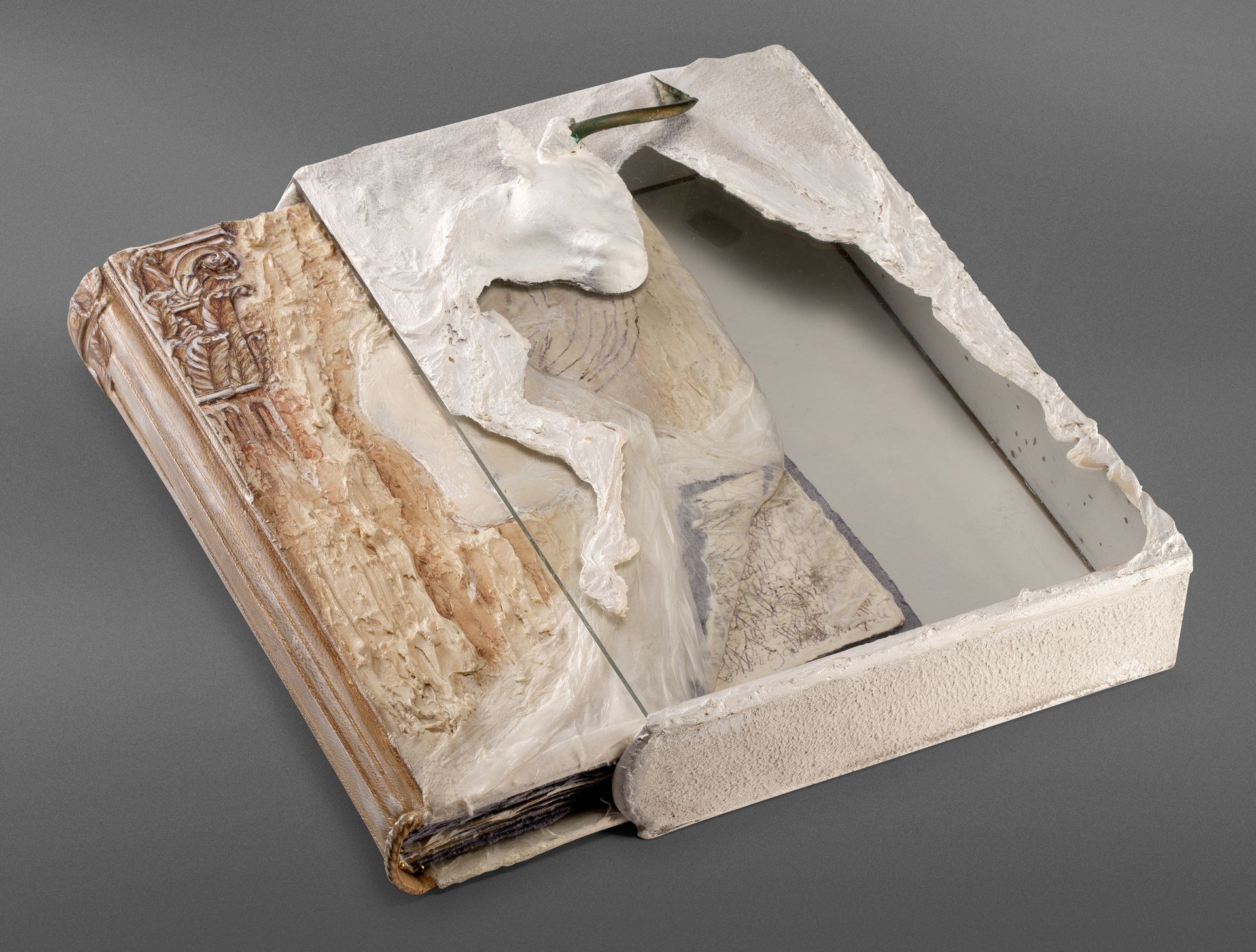
Claudine HEILIClick on the coloured dots and discover the european historical context
Browse the calendar and discover the european historical context
- 1981
- 1982
- 1983
- 1984
- 1985
- 1986
- 1987
- 1988
- 1989
- 1990
- 1991
- 1992
- 1993
- 1994
- 1995
- 1996
- 1997
- 1998
- 1999
- 2000
- 2001
-
1981
Enlargement: Greece
Greece becomes the 10th member state of the European communities.
1st round of acquisitions
1st round of acquisitions of works of art following the declaration of Simone Veil. Acquisitions of artworks from Belgium and France.
-
1982
Piet Dankert
Piet Dankert served as President of the European Parliament from 19 January 1982 until 24 July 1984.
Acquisitions
Acquisitions of artworks from The United Kingdom and Ireland.
-
1983
Acquisitions
Acquisitions of artworks from Germany, Greece, Italy, Luxembourg, the Netherlands and Denmark.
Altiero Spinelli present the draft treaty on European Union.
-
1984
Second European elections
European elections take place for the second time. Voters elect 434 members of the European Parliament from 10 countries. Socialists get about 30% of the seats and widen the gap with the centre-right EPP (25%).
Pierre Pflimlin
Pierre Pflimlin served as President of the European Parliament from 1984 to 1987.
EP report on European Union
The European Parliament adopts a draft treaty on European Union, authored by Italian MEP Altiero Spinelli. The federalist vision in the report inspires future talks on revisions to the founding treaties.
-
1986
Enlargement: Spain & Portugal
Spain and Portugal join in the ”Iberian enlargement”.
-
1987
Henry Plumb
Henry Plumb, Baron Plumb served as President of the European Parliament from 1987 to 1989, the only Briton to hold the post.
Single European Act
The Single European Act formulates the objective of creating a single market by removing barriers and harmonising standards.
It introduces the cooperation and assent procedures that for the first time give the EP a real say on legislation, and makes the name ”European Parliament” official.
-
1988
Sakharov Prize
The Parliament establishes the annual Sakharov Prize for Freedom of Thought to honour people and groups from all over the world fighting for human rights.
South African anti-apartheid activist and future president Nelson Mandela and late Soviet dissident Anatoly Marchenko are the first laureates.
-
1989
Fall of the Berlin Wall
After weeks of civil unrest, the East German authorities open the crossing of the Berlin Wall in an act that symbolises the end of communist rule in Eastern Europe.
Enrique Barón Crespo
Enrique Barón Crespo served as President of the European Parliament from 1989 to 1992.
3rd European elections
In the third elections for the European Parliament a total of 518 MEPs from 12 countries are elected. The Socialists get more seats than anyone else (about 35%).
-
1990
Reunification of Germany
East Germany is reunified with the Federal Republic of Germany. Parliament welcomes 18 non-voting observers to represent the new German provinces until elections in 1994.
2nd round of acquisitions
Continuation of the 2nd round of acquisitions: Belgium, Denmark, Germany and Greece.
-
1991
Wars in former Yugoslavia
Slovenia and Croatia declare independence from Yugoslavia. Tensions between the nations that have been part of the collapsing federation lead to violent wars for much of the following decade despite peace-making efforts by Western powers.
2nd round of acquisitions
Continuation of the 2nd round of acquisitions: Greece and France.
-
1992
Egon A. Klepsch
Egon A. Klepsch served as President of the European Parliament from 1992 to 1994.
2nd round of acquisitions
Continuation of the 2nd round of acquisitions: Ireland, Italy, Luxembourg and the Netherlands.
-
1993
Maastricht Treaty
The Maastricht Treaty paves the way for the creation of the European Union and the euro. It introduces the codecision procedure giving Parliament an equal say with the Council in some areas of legislation and gives Parliament the power to approve the Commission as a whole.
Continuation of the 2nd round of acquisitions: the Netherlands and the United Kingdom.
-
1994
Klaus Hänsch
Klaus Hänsch served as served as President of the European Parliament from 1994 to 1997.
1994 European elections
European elections are held for the fourth time. A total of 567 members of the European Parliament from 12 countries are elected with the Socialists forming the largest group (35%) ahead of the centre-right EPP (28%).
-
1995
Enlargement
Austria, Finland and Sweden join the EU bringing the number of member states to 15.
-
1997
José María Gil-Robles
José María Gil-Robles served as President of the European Parliament from 1997 to 1999.
Signature of Amsterdam Treaty
Signing of the Amsterdam Treaty. The Treaties establishing the European Communities and a few related acts were signed in the presence of the President of the European Parliament, José María Gil-Robles.
-
1998
Belfast Agreement
The signing of the ‘Good Friday’ or ‘Belfast Agreement’ between the Irish and the British governments led to the end of 30 years of conflict in Northern Ireland.
-
1999
1999 European elections
Voters from 15 EU countries go to the polls to elect 626 MEPs. The centre-right EPP-ED becomes the largest political group for the first time.
Nicole Fontaine
Nicole Fontaine served as President of the European Parliament from 1999 to 2002.
EURO
The euro was introduced to world financial markets as an accounting currency on 1 January 1999, replacing the former European Currency Unit (ECU).
Amsterdam Treaty
The Amsterdam treaty simplifies and broadens the application of the codecision lawmaking procedure. Parliament gets the right to approve the Commission president.
-
2000
Charter of Fundamental Rights
The Charter of Fundamental Rights of the EU is solemnly proclaimed after having been drafted by a European convention with the active involvement of MEPs.
Article 13.
Freedom of the arts and sciences. The arts and scientific research shall be free of constraint. Academic freedom shall be respected.Charter of Fundamental Rights of the European Union (2000/C 364/01)
Acquisition programme
3rd round of acquisitions with Austria, Finland and Sweden.
-
2001
National parliaments exhibiton in Brussels and Strasbourg. This exhibition was created at the initiative of President Gil Robles and was officially opened on 17 December 2001 by the then President Nicole Fontaine. It consists of works of art donated or loaned by 15 national parliaments.