

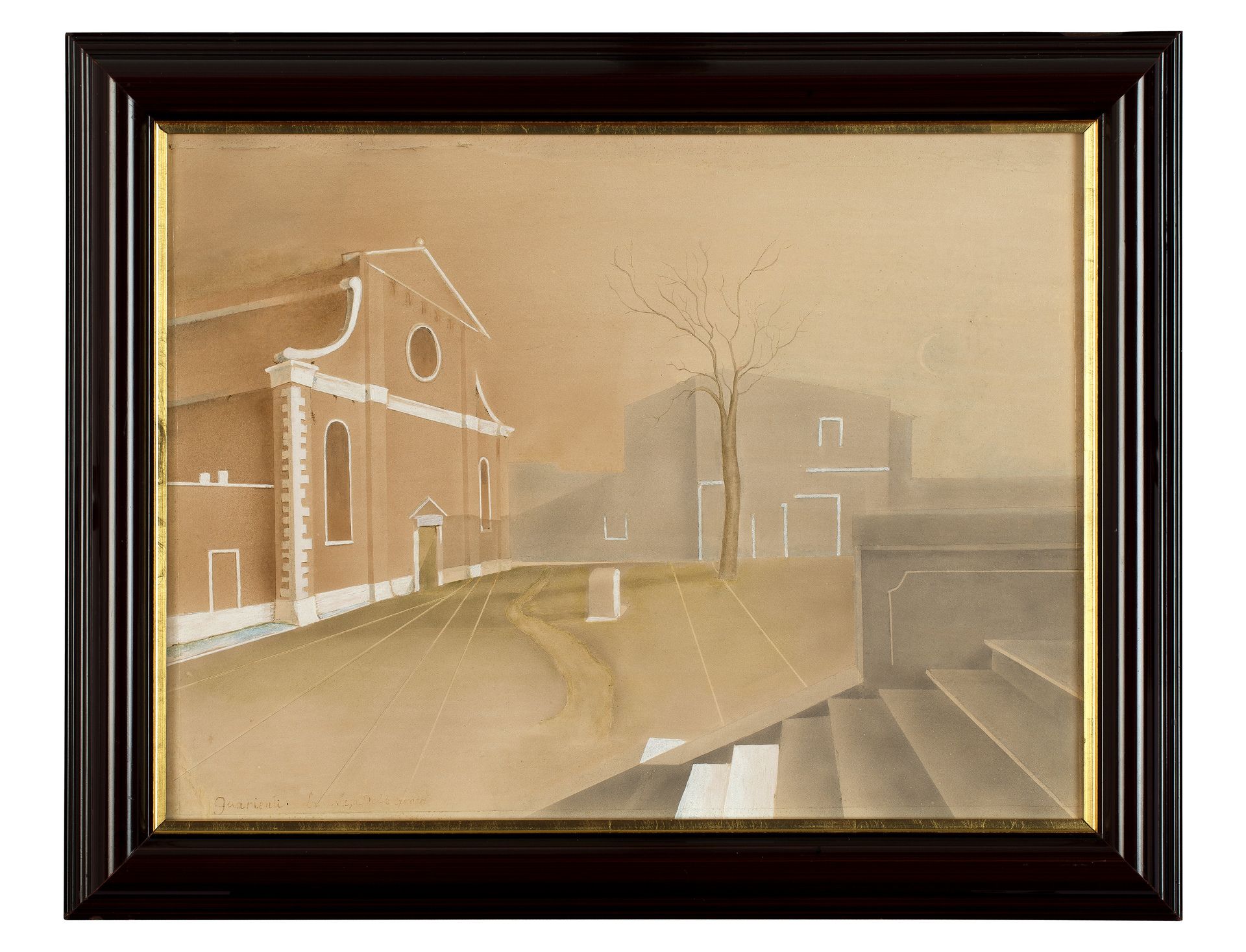
La Chiesa alle Carceri (Veduta di Venezia)
 © SABAM Belgium 2018
Περισσότεροι καλλιτέχνες από την παρακάτω χώρα:
Ιταλία

La Chiesa alle Carceri (Veduta di Venezia)
Carlo GUARIENTIClick on the coloured dots and discover the european historical context
Browse the calendar and discover the european historical context
- 1973
- 1974
- 1975
- 1976
- 1977
- 1978
- 1979
- 1980
- 1981
- 1982
- 1983
- 1984
- 1985
- 1986
- 1987
- 1988
- 1989
- 1990
- 1991
- 1992
- 1993
-
1973
First enlargement
Denmark, Ireland and the UK become the first countries to join the European communities; more will follow in the coming years.
-
1974
End of dictatorship in Portugal and Greece
The Carnation revolution brings down the authoritarian regime in Portugal and paves the way to democratic changes and accession to the European Communities.
The military rule in Athens collapses and Greece returns to free elections and parliamentary democracy. The new government announces joining the European Communities as one of its priorities.
-
1977
Treaty of Brussels
A second budgetary treaty signed in 1975 amends the budgetary procedure, extending the powers of the Parliament.
It now gets the right to reject the Community budget and to grant discharge, i.e. approval, to the Commission for its management of the budget.
-
1978
Democracy in Spain
A referendum in Spain overwhelmingly supports a new constitution setting the country on the path towards democracy.
-
1979
Simone Veil
Simone Veil, former French health minister and survivor of the Auschwitz concentration camp, becomes the first president of the elected Parliament, and the first woman to hold the post.
First direct European elections
The first direct elections for the European Parliament are held, the first international elections in history. A total of 410 members are elected across 9 countries. Socialists come out slightly ahead of the centre-right EPP but none of the groups has an absolute majority in what will become a permanent feature of European elections.
-
1980
Solidarność trade union strike
The Polish trade union ‘Solidarność’, and its co-founders Lech Walesa and Anna Walentynowicz, become household names across Europe and the world following the Gdansk shipyard strikes in the summer of 1980. The union is officially formed on 17 September and plays a leading role over the next decade in bringing democracy to Poland.
Letter from Simone Veil
“(…) l’achat annuel de quelques oeuvres d’art devrait permettre d’encourager des artistes dont la renommée est encore limitée. Aussi, avec l’accord du Bureau du Parlement, j’envisage de faire procéder à l’achat d’oeuvres réalisées par des artistes originaires des dix pays de la Communauté.”
Typewritten letter from Simone Veil (President of the European Parliament),
addressed to Michel Hansenne (President and Minister of the French Community),
December 16, 1980. (Historical Archives of the European Parliament) -
1981
Enlargement: Greece
Greece becomes the 10th member state of the European communities.
1st round of acquisitions
1st round of acquisitions of works of art following the declaration of Simone Veil. Acquisitions of artworks from Belgium and France.
-
1982
Piet Dankert
Piet Dankert served as President of the European Parliament from 19 January 1982 until 24 July 1984.
Acquisitions
Acquisitions of artworks from The United Kingdom and Ireland.
-
1983
Acquisitions
Acquisitions of artworks from Germany, Greece, Italy, Luxembourg, the Netherlands and Denmark.
Altiero Spinelli present the draft treaty on European Union.
-
1984
Second European elections
European elections take place for the second time. Voters elect 434 members of the European Parliament from 10 countries. Socialists get about 30% of the seats and widen the gap with the centre-right EPP (25%).
Pierre Pflimlin
Pierre Pflimlin served as President of the European Parliament from 1984 to 1987.
EP report on European Union
The European Parliament adopts a draft treaty on European Union, authored by Italian MEP Altiero Spinelli. The federalist vision in the report inspires future talks on revisions to the founding treaties.
-
1986
Enlargement: Spain & Portugal
Spain and Portugal join in the “Iberian enlargement”.
-
1987
Henry Plumb
Henry Plumb, Baron Plumb served as President of the European Parliament from 1987 to 1989, the only Briton to hold the post.
Single European Act
The Single European Act formulates the objective of creating a single market by removing barriers and harmonising standards.
It introduces the cooperation and assent procedures that for the first time give the EP a real say on legislation, and makes the name “European Parliament” official.
-
1988
Sakharov Prize
The Parliament establishes the annual Sakharov Prize for Freedom of Thought to honour people and groups from all over the world fighting for human rights.
South African anti-apartheid activist and future president Nelson Mandela and late Soviet dissident Anatoly Marchenko are the first laureates.
-
1989
Fall of the Berlin Wall
After weeks of civil unrest, the East German authorities open the crossing of the Berlin Wall in an act that symbolises the end of communist rule in Eastern Europe.
Enrique Barón Crespo
Enrique Barón Crespo served as President of the European Parliament from 1989 to 1992.
3rd European elections
In the third elections for the European Parliament a total of 518 MEPs from 12 countries are elected. The Socialists get more seats than anyone else (about 35%).
-
1990
Reunification of Germany
East Germany is reunified with the Federal Republic of Germany. Parliament welcomes 18 non-voting observers to represent the new German provinces until elections in 1994.
2nd round of acquisitions
Continuation of the 2nd round of acquisitions: Belgium, Denmark, Germany and Greece.
-
1991
Wars in former Yugoslavia
Slovenia and Croatia declare independence from Yugoslavia. Tensions between the nations that have been part of the collapsing federation lead to violent wars for much of the following decade despite peace-making efforts by Western powers.
2nd round of acquisitions
Continuation of the 2nd round of acquisitions: Greece and France.
-
1992
Egon A. Klepsch
Egon A. Klepsch served as President of the European Parliament from 1992 to 1994.
2nd round of acquisitions
Continuation of the 2nd round of acquisitions: Ireland, Italy, Luxembourg and the Netherlands.
-
1993
Maastricht Treaty
The Maastricht Treaty paves the way for the creation of the European Union and the euro. It introduces the codecision procedure giving Parliament an equal say with the Council in some areas of legislation and gives Parliament the power to approve the Commission as a whole.
Continuation of the 2nd round of acquisitions: the Netherlands and the United Kingdom.